
Why Every Brick & Mortar Business Needs an eCommerce Website (Even If Most of Your Sales Happen In-Store)
May 28, 2026
If you own a brick and mortar shop, a boutique, or any kind of product based business with a physical location, there's a really good chance you've thought some version of this:
"I don't really need a website. Most of my customers shop in-store anyway."
Or maybe you do have a website, but it's been collecting dust since 2019 because it doesn't feel like a priority compared to everything else on your plate.
I get why retailers think this way. But as a Shopify website designer who has built sites for every kind of product based business you can imagine, from full eCommerce brands to brick and mortar shops to the in-between hybrid stores, I'm here to tell you that an eCommerce website might actually be one of the most powerful tools you have for driving foot traffic and growing your in-store sales.
I know. It sounds backwards. They're shopping online though, Cassidy.
Stay with me. In this post, I'm walking through exactly how an eCommerce website supports your physical store, what it does behind the scenes to bring more customers through your door, and what to actually include on it so it works for your business instead of just sitting there.
What Is an eCommerce Website for a Retail Store?
An eCommerce website for a retail store is a fully functional, shoppable site that lets customers browse your products, explore your collections, and make purchasing decisions before they ever set foot inside your shop.
It's not just a digital business card with your hours and address (although yes, it should have that too). It's an active sales tool that supports both your online and in-store shopping experiences.
Even if a customer ultimately decides to come shop in person, your eCommerce website is doing a ton of heavy lifting in that decision. It lets them:
- Browse your inventory before they drive over
- Check pricing, store hours, and location
- Get a feel for your brand, your aesthetic, and your story
- See featured collections or new arrivals
- Confirm whether something they want is actually in stock
Instead of acting as a passive informational page, your eCommerce website becomes the front door of your business. And for a lot of your customers, it's the first impression they'll ever have of you.
Why Brick and Mortar Stores Need an eCommerce Website
Even if you don't sell a ton online, the reality of how shoppers behave in 2026 is this: they're researching online first.
Before someone walks into a new boutique, gift shop, or specialty store, they're almost always going to:
✓ Search for your store on Google
✓ Click through to your website to see what you offer
✓ Check your hours and location
✓ Get a quick read on your brand and your price point
If you don't have a website, or if your current one is outdated and doesn't reflect what you actually carry, you're losing potential customers before they ever know your store exists.
But you might be thinking, "I have social media though! Isn't that enough?"
Social media is a great marketing tool and I do recommend that retailers use it. But here's the truth: social media isn't something you own. The algorithm decides who sees your content. Posts get buried. Platforms change their rules without warning. And not everyone who is searching for a store like yours is going to find you on Instagram.
Your website is one piece of digital real estate you fully control. It gives you a reliable, consistent place to send people, build trust, and create a brand experience that doesn't disappear when an algorithm shifts.
At the end of the day, your website is a trust builder. And trust is often the deciding factor in whether someone chooses to visit your store.
The Real Benefits of an eCommerce Website for Retailers
Okay, let's get into the actual benefits. Here's what an eCommerce website is doing for your business behind the scenes, even when you can't see it.
Customers Pre-Shop Before They Ever Walk Through Your Door
This is something I see allll the time, both with my clients and inside my family's gourmet housewares store, The Cook's Nook.
Customers walk in with their phone in hand, already on the website, already looking at a specific product. They've taken time to scroll the collections, click into items, and narrow down what they want before they ever pull into the parking lot.
That means they're not browsing aimlessly. They're walking in with a purpose – to buy something that we have in stock in our store and the website did allllll of the selling for us.
A strong eCommerce website lets customers pre-shop your store on their own time, which leads to more confident, more motivated in-store visits. Instead of hoping someone wanders in and finds something they like, your website is doing that work ahead of time, helping them discover the products they already know they want to see (and buy) in person.
Your Website Pre-Sells the Product
This benefit might honestly be the biggest reason every brick & mortar business should have a real eCommerce site.
In a lot of cases, the decision to purchase has already been made before the customer ever arrives at your store. They've seen the product. They've read the description. They've checked the price. They've decided this is what they want.
By the time they walk in, they're not starting from scratch. They're continuing a shopping experience that started online.
That changes the role of your physical store in a really powerful way. Instead of needing to convince someone to buy, your store becomes the place where they confirm the decision, see the product in person, and complete the purchase. Quicker, more confident buying decisions. Smoother experiences for both you and your customer.
This is the kind of thing that protects your margins too. Less time spent convincing, less discounting to close the sale, more customers walking in already sold.
Real-Time Inventory Builds Confidence
One of the biggest hesitations a customer has before deciding to drive to your store is uncertainty. They're not sure if you actually have what they're looking for, and they're not about to waste a trip, especially in today’s world of instant gratification that comes from next day delivery.
When your eCommerce website reflects your real-time or near real-time inventory, it removes that uncertainty completely.
Customers can browse online, see what's in stock, and feel confident that the item will be there when they arrive. That clarity makes it so much easier for them to justify the trip. Without that visibility, customers will default to a competitor whose website does show inventory, purchase from a big box store with an online shopping experience that makes buying easy, or skip the trip entirely.
In-Store Pickup and Local Delivery Options
An eCommerce website opens the door for flexible shopping options like in-store pickup and local delivery, which are huge for product based businesses with a physical location.
Some customers want the convenience of buying online and just stopping by to pick up their order. Others will browse your site and decide they'd actually rather come in and shop more in person while they're there. Either way, your website is the starting point for that interaction.
Offering options like in-store pickup not only drives guaranteed visits to your store, but it also creates opportunities for additional purchases once that customer is physically inside your space. (And if you've ever had a $20 pickup turn into a $90 sale because they grabbed something else on the way to the counter, you already know exactly what I'm talking about.)
It Expands Your Reach Beyond Your Zip Code
Without a website, your visibility is mostly limited to people who happen to drive past your store or hear about you from a friend.
With one, your reach grows way beyond your immediate neighborhood. Customers who are searching online for specific products, planning a shopping trip, or looking for local retailers in your category now have a way to find you before they're ever close.
Your website lets you show up in the moments when someone is actively looking for something you sell. That shifts your business from being purely discovery-based to being a destination people plan to visit because they've already connected with your brand and your products online.
What to Include on an eCommerce Website for a Retail Store
Now that you know what an eCommerce website is actually doing for your business, the next question is usually: "Okay, but what should I even put on it?"
Great question. If your goal is to drive foot traffic and support both your online and in-store sales, your eCommerce website needs to be designed with intention.
Here are the key elements every retailer's site should have.
Clear, Easy-to-Find Store Information
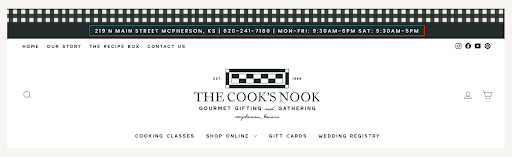
Your address, store hours, and contact info should be one of the easiest things to find on your entire site.
A lot of retailers tuck this stuff in the footer, which means customers have to scroll all the way down to find out if you're open today. Don't make them work that hard. Put it on your homepage, in a clear and visible spot, ideally with your address and hours highlighted in a way that's easy to scan on mobile.
Shoppable Products and Organized Collections
This is one of the most important pieces of an eCommerce website for a brick and mortar retailer.
Fully shoppable products and thoughtfully organized collections are what allow customers to browse your store before they ever walk through your door. And in a lot of cases, it's exactly what motivates the visit in the first place.
When customers can scroll your collections, click into products, and see what you carry, they can quickly figure out if your store aligns with what they're looking for. They get clarity on your style, your price point, and whether or not it's worth the trip.
To make this work, your site should include:
- Strong product imagery and descriptions so customers can clearly see and understand what you offer
- Real-time or near real-time inventory so they feel confident the product is actually available
- In-store pickup options (if possible) to bridge the online browsing experience with the in-store purchase
When your website is built like this, customers aren't just window shopping. They're identifying products they want and walking into your store with certainty that your brand is for them, often ready to buy.
Your Brand Story
Beyond the practical stuff, your website needs a real "About" or brand story page.
This is where you give customers a reason to support your shop instead of the next one. Most product based business owners are sitting on incredible stories (the why behind the business, the people behind the counter, the values that shape what you carry) and most of them never get told online.
That story is what builds connection. It's what turns a one-time visitor into a loyal customer. It's also what gives you a competitive edge against bigger retailers who don't have a real story to tell.
A great example of this is the "Our Story" page I built for my client Baby + Me Maternity. It tells customers exactly who they are, what they stand for, and why they're worth supporting, all in a way that perfectly matches the in-store experience.

This is also where having a clear brand strategy makes a massive difference. Without a defined mission, vision, and messaging foundation, it's really hard to communicate who you are and what you stand for in a way that lands. (Pretty branding without strategy behind it doesn't move the needle, which is something I talk about with every retailer I work with.)
An Events and Promotions Page
If you host in-person events at your store, like an anniversary sale, a sip and shop, holiday markets, classes, or workshops, your eCommerce website is the perfect place to support those.
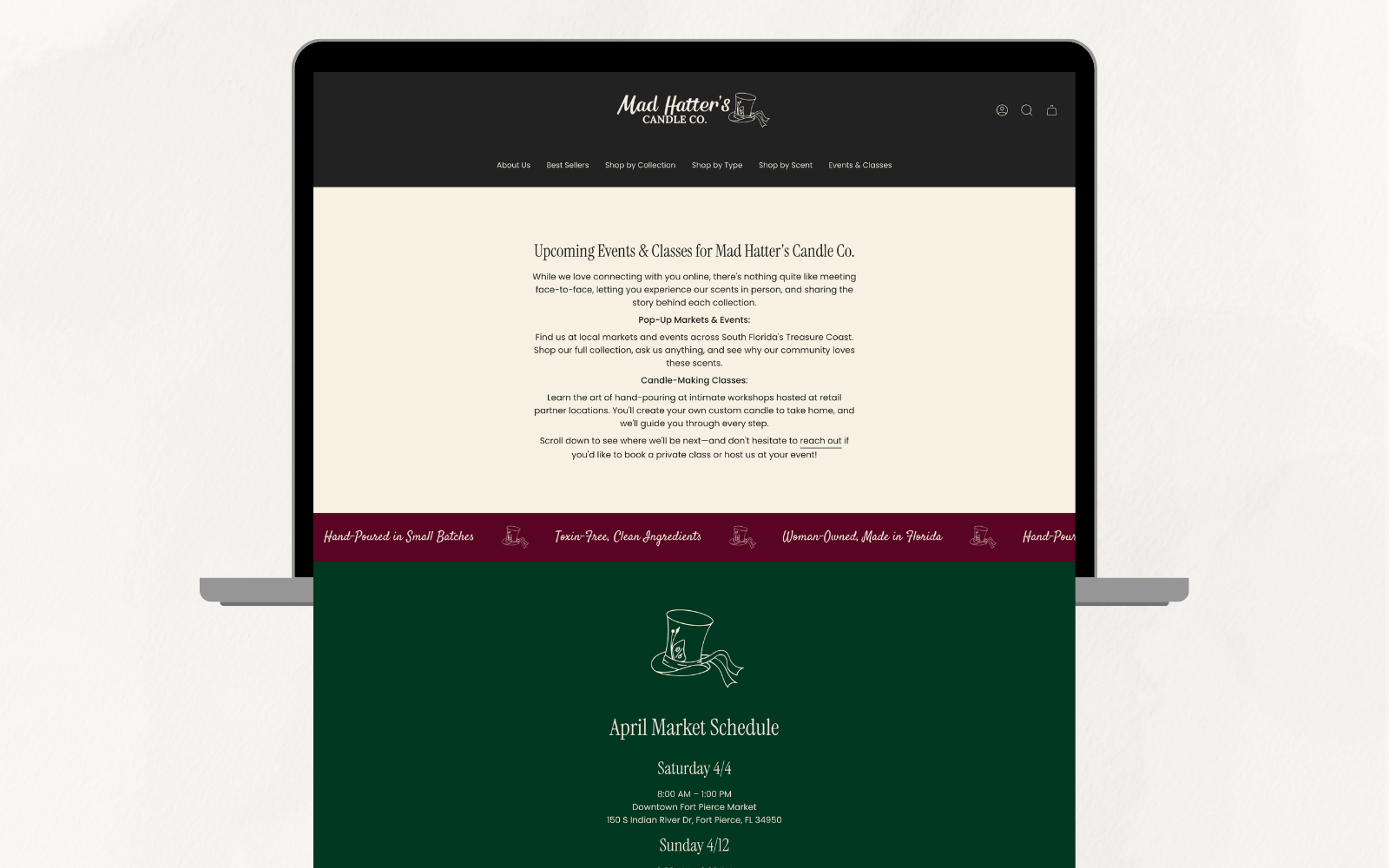
Having a dedicated events or promotions page gives you a single home base to post updates, share what's coming up, and give customers a reason to plan a visit. It also gives your social posts somewhere to point back to. Instead of "save the date" floating in the void on Instagram stories, you've got a real link with all the details.
A really great example of this is the events page I built for my client Mad Hatter's Candle Co. They use it to share upcoming markets, in-store events, and candle making workshops, which keeps their community informed and gives them a constant reason to visit the shop.
An Email Sign-Up Form
Your website is a huge opportunity to grow your email list, but only if you actually give visitors a clear way to sign up.
Your site should include some kind of email opt-in. A pop-up that appears a few seconds after someone lands on your site. A signup section on your homepage. A spot in your footer. A free resource or perk in exchange for an email address. All of those are great options, and the best setup uses more than one.
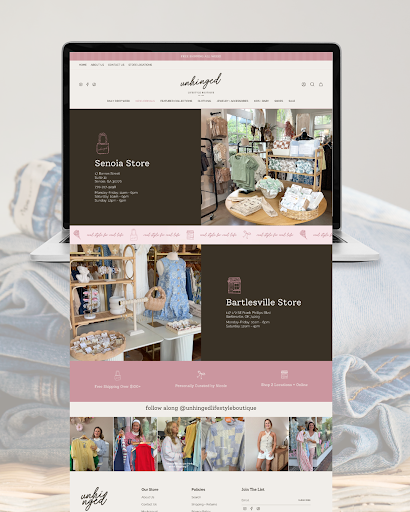
A great example of this is the homepage I built for my client Unhinged Lifestyle Boutique. We added a dedicated email opt-in section near the bottom of their homepage so it stands out more than just a tucked-away form in the footer.

Email is where the real customer relationship lives long-term. It's how you bring people back, drive repeat visits, promote new arrivals, and build a community around your brand. If your retail business isn't using email yet, this is the absolute best place to start. (I broke down exactly why retail businesses need to be using email in this blog post if you want to go deeper on it.)
Strong Branding That Matches Your In-Store Experience
Last one, but it's a big one. Your eCommerce website should reflect the same experience customers will have when they walk into your store.
If your shop has a warm, inviting, elevated feel with thoughtfully merchandised displays, your website should have that same energy and aesthetic through intentional design, cohesive branding, and elevated product imagery.
When the online and in-store experiences match, the customer feels something familiar the second they step inside. The website doesn't just describe your store. It previews it. That continuity is what builds trust, drives confidence, and turns first-time visitors into repeat customers.
Your Website Is the Most Important Marketing Investment for Your Retail Business
If you take one thing away from this post, let it be this:
Your eCommerce website should do more than just exist. It should actively support your business and drive both online and in-store sales.
This is also why your website is almost always the first investment I recommend for a product based business owner who's ready to grow online. Email marketing, social media, paid ads, all of those are great tools, but they're sending traffic somewhere. If that somewhere isn't built to convert and reflect your brand well, you're spending money to send people to a digital space that isn't ready to receive them.
Get the website right first. Then everything else you do to drive traffic actually works harder for your business.
Working with Simply Lynn's Creative
I'm Cassidy, the founder of Simply Lynn's Creative, and I help product based businesses (boutiques, gift shops, kitchen stores, kids and baby brands, candle makers, you name it) build the kind of online presence that supports the real life business they've built.
I grew up in retail. My family's store, The Cook's Nook, has been on Main Street since 1988, and I'm still in there regularly. That's why every Shopify website I build is rooted in actual retail strategy, not just design trends.
Here's what I offer for retailers who are ready to put a real website to work for their business:
→ If you want a Shopify website built specifically for your retail business:
- Shopify Website Design Services – Whether you need a fully custom, strategy-driven build or a faster, high-impact launch, I have an option that fits where your business is right now. Every site is built to integrate your brand, support in-store shopping behavior, and set you up for ongoing growth through email marketing.
→ If you want to DIY but need expert direction:
- The Ultimate Shopify Website Audit – A thorough, customized audit of your current Shopify site with specific recommendations for what to fix, what to add, and what to prioritize first to drive more sales.
→ If you want a free starting point:
- The Shopify Sales Optimization Check – A free resource that walks you through the most common things holding your Shopify store back from converting. A great place to start if you're not sure where the gaps in your current site actually are.
- My Inventory Genius Podcast Episode with Ciara – If you want to go deeper, Ciara and I sat down on her podcast to talk through exactly this kind of stuff: how a strong website supports your retail business, why email marketing matters for product based brands, and what to actually focus on when you're growing online. Give it a listen!
Each of these is built for independent retailers who want to compete through brand, experience, and customer relationships, not just price.
Your in-store experience already wows your customers. Let's make sure your online presence does too.